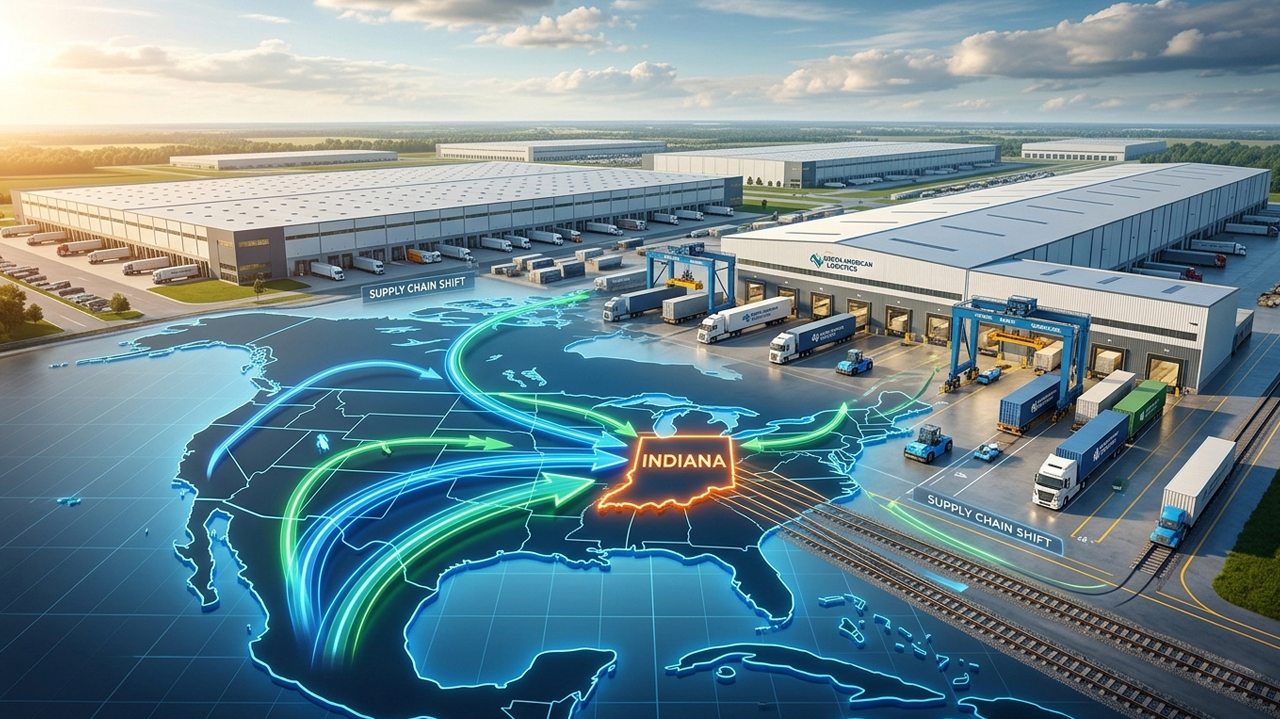
Global supply chains are entering a new phase of transformation. After decades of relying on distant manufacturing hubs, companies are bringing production and distribution closer to the United States. What began as a response to pandemic disruptions has evolved into a broader structural shift known as nearshoring. The scale of this transition is significant. According to recent industry research by the Reshoring Initiative, the share of companies actively nearshoring production nearly tripled in 2023. By 2026, an estimated 85 percent of companies worldwide expect to manufacture and sell most of their products within the same geographic region, up sharply from just 43 percent in 2023. U.S. companies are moving even faster, with projections suggesting that more than 90 percent will regionalize production by 2026. Imports from several low-cost Asian manufacturing countries declined in 2023, while trade with Mexico reached record levels. While Mexico has become the primary destination for much of this manufacturing shift, the broader supply chain network that supports it is increasingly anchored in the Midwest. For industrial tenants and investors, this trend is creating new demand patterns for warehouse, distribution, and manufacturing facilities, placing logistics-oriented markets like Indiana at the center of North American supply chains.
Why Companies Are Moving Production Closer to the U.S.
The shift is driven by the need to mitigate risk, control costs, and improve agility in a fast-evolving global economy. Several converging forces have accelerated this shift over the past several years.
Reducing Supply Chain Risk
The COVID-19 pandemic exposed the vulnerabilities of long, globally dispersed production networks. Companies relying on goods from distant regions faced weeks-long transit delays, disrupting inventory management and the ability to meet market demand. Nearshoring to North America, particularly Mexico, offers significantly shorter transit times, often reducing shipping from several weeks to just a few days. This proximity improves supply chain efficiency and gives businesses greater flexibility when responding to shifting demand or unexpected disruptions.
Trade Policy and Tariffs
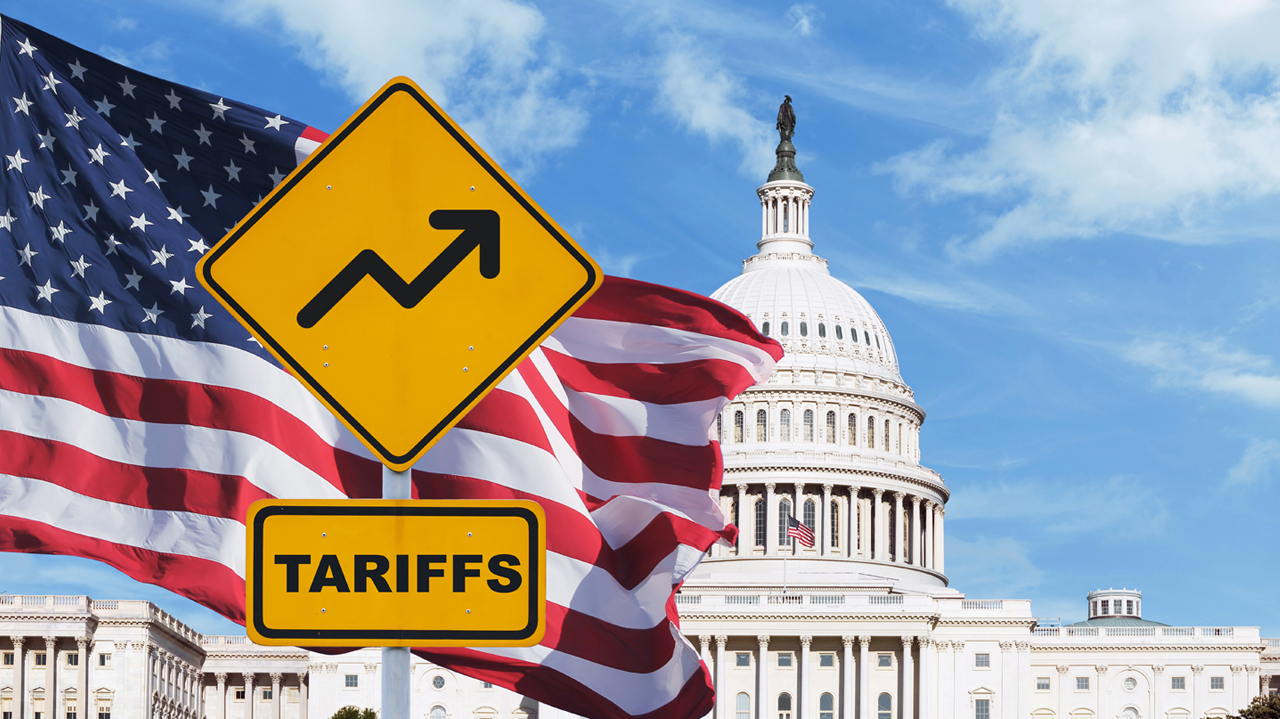
The U.S.-China trade conflict introduced tariffs that raised the cost of sourcing from Asia, pushing many manufacturers to evaluate alternative North American production locations. The United States-Mexico-Canada Agreement (USMCA) reinforced this shift by providing a stable, duty-free trade framework across the region. Together, these policy changes have strengthened the momentum behind nearshoring and accelerated the realignment of global manufacturing networks.
Mexico as a Manufacturing Destination
Mexico’s geographic proximity to the United States, competitive labor costs, and deep trade integration under USMCA have made it an attractive production destination. Mexico has become the United States’ largest trading partner, with trade totaling $935 billion. A significant portion of this cross-border trade moves by truck, underscoring the growing importance of land-based freight corridors connecting the two countries.
From Mexican Factories to Midwestern Warehouses: How Nearshoring Drives U.S. Industrial Demand
Manufacturing activity in Mexico is only one part of the nearshoring equation. When production relocates closer to the United States, companies must also redesign how finished goods, components, and inventory move across the continent.
The real opportunity is not just in manufacturing relocation, but in controlling the distribution nodes that support it.
That shift is already translating into increased demand for strategically located industrial warehouse space and distribution infrastructure across the United States. A large share of cross-border freight enters the country through Laredo, Texas, the largest inland port in the United States by trade value. From there, goods move north through established freight corridors connecting Texas with major logistics markets across the central United States. The most significant of these routes is Interstate 35, often called the NAFTA Superhighway, which links Mexico’s manufacturing clusters with distribution markets stretching through Texas and into the Midwest.
In 2025, the Port of Laredo accounted for roughly 35 percent of total U.S.-Mexico trade, handling approximately 20,000 commercial truck crossings per day and supporting annual trade flows approaching $800 billion.
This corridor effectively extends the operational footprint of Mexican manufacturing into U.S. markets. As new production facilities come online in Mexico, companies frequently expand warehouse networks, supplier storage, and third-party logistics operations within the United States to support those supply chains. Industry research confirms that nearshoring is already increasing demand for logistics and warehouse space across U.S. border markets and freight corridors tied to cross-border trade.
According to NAIOP research, industrial leasing activity surged 12 percent in Q4 2025, with net absorption reaching 149.2 million square feet nationwide, supported in part by companies restructuring supply chains around nearshoring strategies.
Most companies wait too long to adjust their supply chain strategy—don’t be one of them. Let Allies Commercial Realty help you identify the right location before competition intensifies.
Schedule a discovery call Indiana as a Logistics Hub: Strategic Advantages for Industrial Tenants
As nearshoring accelerates across North America, companies are placing greater emphasis on distribution locations that can efficiently serve the broader U.S. market. Indiana has emerged as one of the most strategically positioned states in this network, offering the infrastructure, location, and operational advantages that modern industrial supply chain operators require.
Central Location. According to The Clinton Courier, Indiana sits within a one-day truck drive of roughly 80 percent of the U.S. population, and near major Midwest metros including Chicago, Detroit, and Cincinnati.
Interstate and Highway Network. Major freight corridors, including I-65, I-70, I-69, and I-74, run through the state, connecting Indiana to markets across the Midwest, the South, and the East Coast.
Rail and Waterway Access. Indiana is served by multiple Class I railroads and the Ports of Indiana along Lake Michigan and the Ohio River, providing access to domestic and international shipping routes.
Air Cargo Infrastructure. Indianapolis International Airport consistently ranks among the top air cargo airports in the United States and hosts the second-largest FedEx Express hub in the world, enabling the rapid movement of high-value or time-sensitive goods.
Workforce for Manufacturing and Logistics. Indiana’s long history in manufacturing and logistics is supported by technical training programs focused on supply chain management, advanced production, and transportation technologies.
Cost-Competitive Environment. Relative to coastal markets, Indiana offers lower operating costs, favorable corporate tax rates, competitive utility pricing, and affordable industrial land.
Corporate Investment and Business Incentives Expanding Indiana’s Industrial Base
Indiana’s growing role in North American supply chains is reflected in measurable corporate investment across the state. ITS Logistics expanded its Indianapolis campus by approximately 700,000 square feet in 2023, bringing its total Indiana distribution footprint to nearly four million square feet. Global Polymers announced a manufacturing expansion in southern Indiana, and BroadRange Logistics has continued to grow its warehousing capacity to support clients’ restructuring supply chains closer to U.S. markets.
Indiana’s pro-business environment reinforces these investment decisions. Key programs supporting industrial and logistics investment in the state include:
Indiana Economic Development Corporation (IEDC). Provides tax credits for job creation, capital investment, and research and development, helping companies reduce costs when expanding or relocating operations.
Next Level Jobs Program. Offers training grants and certifications in logistics, advanced manufacturing, and other high-demand fields to help employers access a skilled workforce.
Conexus Indiana. Supports the state’s manufacturing and logistics sectors through workforce development, technology initiatives, and industry collaboration programs.
Conclusion
Nearshoring is reshaping supply chains across North America, and Indiana industrial real estate is positioned to be among the primary beneficiaries of that shift. With strong infrastructure, a central location, a skilled workforce, and increasing corporate investment, the state continues to attract logistics operators, manufacturers, and industrial investors seeking long-term stability and growth. For businesses evaluating expansion or relocation, understanding the right submarkets, freight corridors, and development opportunities is critical to making informed decisions in a competitive market. At Allies Commercial Realty, we work with industrial tenants, investors, and developers to identify properties and opportunities aligned with evolving supply chain trends. Our team understands not just where the Indiana industrial real estate market stands today, but where it is headed. Whether you are a tenant seeking the right facility or an investor looking for high-potential assets, we deliver the insight and service you need to succeed.


















 Listen to Our Blogs