















 Listen to Our Blogs
Flex Space 101: Why Indiana Investors Are Flocking to This Asset Class

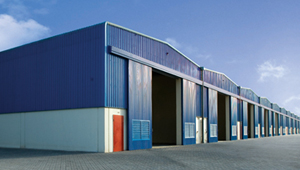
With shifting supply chains, evolving workplace demands, and changing economic conditions, flex spaces are experiencing an unprecedented surge across the United States. Indiana, in particular, is emerging as one of the fastest-growing markets for this versatile asset class. The adoption of flexible workspace solutions is gaining momentum globally, with over half of global occupiers (55%) currently using them, and nearly one-fifth (17%) expected to follow suit in the near future. This shift reflects a fundamental change in how companies approach their commercial real estate strategies, which is favoring adaptable, cost-efficient spaces that can accommodate multiple functions under one roof. Indiana is reflecting this national growth, with Indianapolis and nearby submarkets experiencing robust leasing activity and increasing development of flex properties. With its strategic location at the heart of major transportation networks and a strong, diverse economy, the state is attracting businesses that require flexible spaces to support growth and operational efficiency. Today, we will explore what flex space is, examine the key drivers attracting investors to this asset class, highlight essential metrics to watch, and provide insights into why flex properties are becoming a cornerstone of the state’s commercial real estate landscape.
What is Flex Space?
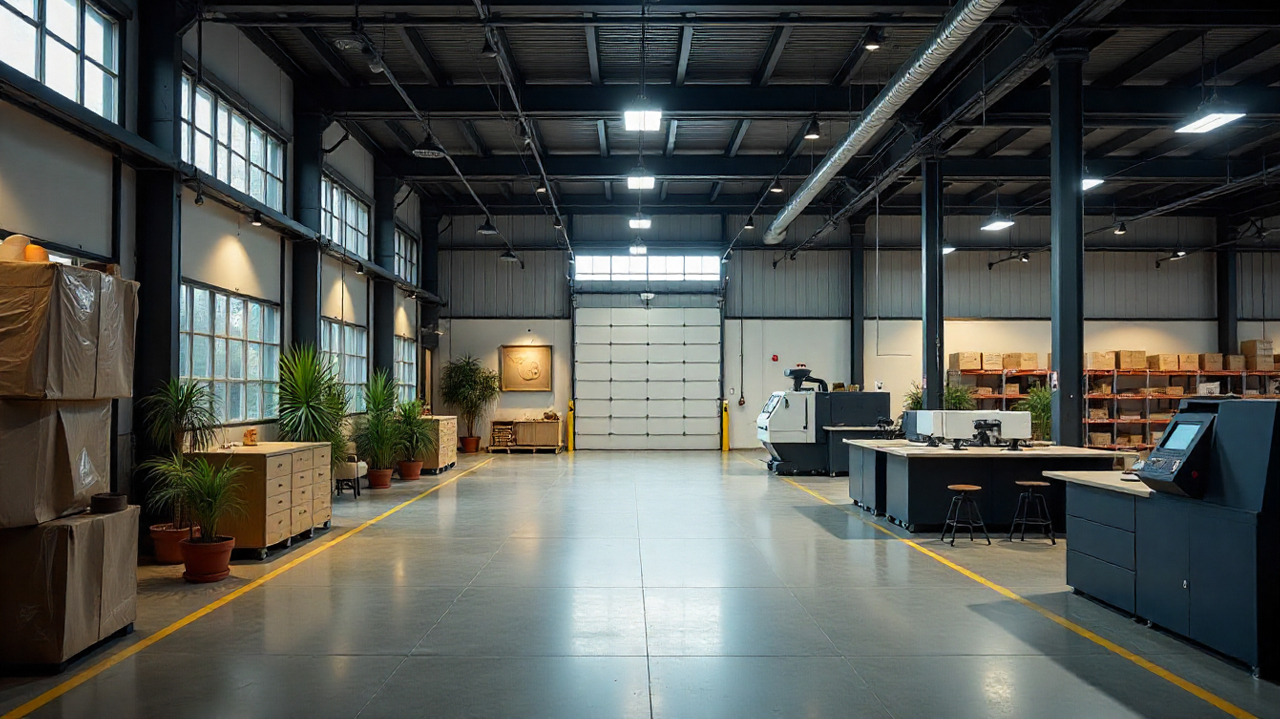
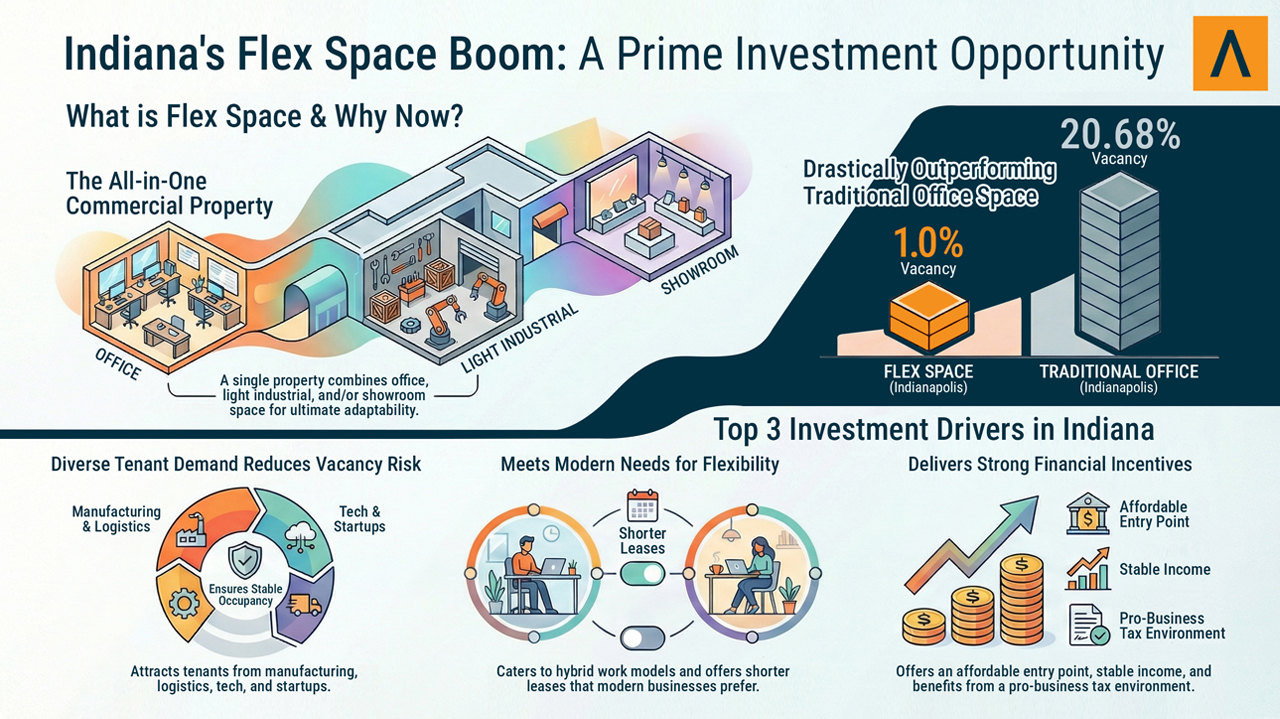
Flex space is a versatile category of commercial property that accommodates a variety of business activities within a single property. Unlike traditional commercial spaces, which typically dedicate areas to one specific function with long-term commitments and fixed layouts, flex spaces prioritize adaptability. Tenants can customize the space to suit evolving operational needs, including scaling up or down, reconfiguring layouts, or even shifting between uses such as office, light industrial, or showroom. This flexibility allows businesses to respond quickly to market changes without being tied down by lengthy leases or costly renovations. In Indianapolis, the flex industrial sector is experiencing exceptionally low vacancy rates, around 1.0% as of mid-2025. In contrast, traditional office spaces in the area show much higher vacancy rates, reaching approximately 20.68%. This sharp difference highlights the strong demand and limited availability of flex spaces, making them highly desirable for tenants and a strategic investment opportunity for property owners and investors.
Key Drivers: Why Indiana Investors Are Being Attracted to Flex Space More and More
Indiana’s position as the “Crossroads of America” has made it a magnet for businesses seeking strategic locations, affordable operating costs, and strong transportation links. As companies across industries expand or relocate to the state, demand for flexible commercial real estate that can support multiple functions under one roof continues to rise. For investors, primarily local and non-institutional buyers, flex space offers a mix of versatility, stable tenant demand, and relatively lower acquisition costs compared to traditional assets. These factors are driving increased investment activity and positioning flex space as a strong performer in Indiana’s competitive commercial real estate market.
Multi-Industry Adaptability Fuels Strong Demand
Flex spaces are designed to support a wide range of business operations within a single property, making them highly adaptable to the diverse needs of different tenants. Indiana’s diverse economic base, including strong manufacturing, logistics, and technology sectors, creates a natural fit for this asset type. These properties can accommodate a range of office functions, light industrial activities, warehousing, and even creative or specialty uses, attracting tenants from multiple industries. This broad tenant appeal drives strong demand, making flex space an attractive option for investors.
Meeting Hybrid Work Demands
As hybrid work models become more prevalent, many companies are downsizing and seeking spaces that offer greater flexibility and adaptability. Businesses want layouts they can easily adapt for hybrid teams without committing to large, traditional office leases. Flex spaces meet this need by providing customizable environments that work well for smaller teams, startups, or satellite offices. Investors in Indiana are recognizing this shift and are increasingly drawn to properties that align with evolving tenant preferences.
Increasing Demand from Startups and Small Businesses
Startups and small businesses play a vital role in Indiana’s economy, and the state’s growing entrepreneurial ecosystem requires affordable, scalable space. Flex properties address this need by allowing smaller tenants to combine office, production, and storage functions within a single location. For investors, this expanding tenant base provides a steady, reliable source of leasing activity, making flex space an increasingly attractive asset in the market.
Growth of E-commerce and Logistics in Indiana
The growth of e-commerce in Indiana is strongly supported by the state’s excellent transportation infrastructure, which provides access to major highways and regional distribution networks. As online retail continues to expand, companies are increasingly seeking adaptable spaces that can handle both storage and operational functions near key urban hubs. This is driving strong demand for flex properties that combine office, warehousing, and distribution in one location, leading to higher occupancy rates and the ability to command premium pricing.
Lower Vacancy Risk Due to Diverse Tenant Mix
A key factor attracting investors to flex spaces in Indiana is their ability to maintain steady occupancy. These properties cater to a diverse range of tenants, including logistics operators, light industrial users, creative businesses, and service providers. This variety helps minimize prolonged vacancies. Even if one commercial real estate sector slows, interest from other tenant groups helps keep the space active, reducing overall risk and ensuring more predictable cash flow.
Shorter Lease Terms Offering Flexibility
Today’s businesses value adaptability more than ever. Unlike conventional long-term leases, flex spaces let tenants sign shorter agreements, making it easier to adapt as their needs change. This is especially appealing to companies that need to adjust their space quickly, such as small businesses, seasonal operators, or rapidly expanding firms. For investors, it means the ability to keep rents aligned with the market and respond to market changes quickly.
Affordable Entry Point for Investors
Flex spaces offer a practical entry point for new and smaller investors to enter the commercial real estate market. With lower acquisition costs and consistent tenant demand, investors can spread their capital across multiple properties, thereby diversifying their portfolio. This diversification helps reduce risk while building a stronger, more resilient portfolio.
Potential for Adaptive Reuse and Value-Add Opportunities
By redeveloping underutilized properties with thoughtful renovations and modern features, investors can capitalize on the growing demand for flexible spaces in Indiana. This cost-efficient method transforms single-function assets into vibrant, multi-use centers that can attract a diverse range of tenants and create passive income streams.
Unlock the potential of flex space in your portfolio. Book a discovery call now to get personalized insights and investment guidance.
Schedule a Discovery CallFavorable State and Local Tax Environment
Indiana’s pro-business tax policies and incentive programs create an attractive climate for commercial real estate investment. Reduced holding costs, development-friendly incentives, and a lower overall tax burden support both short- and long-term profitability for flex space investors. These advantages make Indiana a compelling market for both new entrants and experienced investors seeking stable and cost-efficient opportunities.
Strong Returns with Stable Income
Flex space investments typically yield steady income and firm performance, driven by consistently high occupancy rates and broad tenant demand. The diverse tenant base helps minimize vacancy fluctuations, while ongoing leasing activity creates opportunities for rent growth. Together, these factors support reliable cash flow and resilient long-term returns for investors.
Challenges of Investing in Flex Spaces and Key Considerations
Investing in flex spaces can be highly rewarding, but it requires thoughtful consideration of the challenges that may arise. Factors such as market dynamics, tenant behavior, and operational considerations can significantly influence investment performance. Understanding elements such as location sensitivity, tenant turnover, lease flexibility, property management complexity, zoning regulations, and potential market saturation is crucial for making informed decisions. A clear understanding of these factors allows investors to manage risk effectively and maximize profitability.
| Key Factors | Challenges | Considerations |
|---|---|---|
| Market Awareness and Location Sensitivity | Selecting the wrong market or location can result in weak demand and higher vacancy rates. | Conduct detailed market research to identify strong submarkets. Evaluate access to transportation, workforce availability, and industry clusters. |
| Tenant Turnover and Lease Flexibility | High tenant turnover and short leases can cause income instability and increased vacancy risk. | Analyze tenant mix for stability and diversification. Balance short-term lease flexibility with the need for longer lease commitments by reviewing renewal rates and escalation clauses to forecast income. |
| Property Management and Operational Complexity | Managing multiple tenants with varying needs increases operational costs and complexity. | Budget for responsive property management and flexible tenant services. Utilize technology and efficient systems to optimize space utilization and track maintenance. Plan for operational costs accordingly. |
| Zoning and Regulatory Challenges | Local zoning restrictions or changes can limit the use of or redevelopment options for properties. | Verify zoning compliance and future use permissions before acquisition. Stay informed on local regulations and engage proactively with planning authorities. Factor regulatory risks into underwriting. |
| Market Saturation Risk | An oversupply of flex space in a market can lead to reduced rental rates and slower absorption. | Track local supply and demand metrics closely. Avoid overinvesting in saturated or saturated-adjacent submarkets. Diversify commercial property investments geographically to mitigate the risk of local oversupply. |
Conclusion
Flex space’s rise is more than a fleeting commercial real estate trend; it is a fundamental response to how businesses now work and evolve. Indiana’s market reflects this shift vividly, with demand for adaptable, affordable, and efficient flex properties continuing to grow. As hybrid work, e-commerce expansion, and startup growth accelerate, flex spaces meet the complex needs of today’s businesses better than traditional real estate forms. Understanding the key drivers and monitoring critical market metrics will be essential for investors looking to capitalize on this trend. For those willing to engage with market realities and challenges, flex space investments in Indiana offer a stable yet dynamic path forward.
Topic: Flex Space
Interested in taking the next step toward investing in flex space? Consult with one of our experienced brokers to find the ideal property that aligns with your goals.
Talk to a Broker
About the Author - Adam Stephenson, CCIM, SIOR
With over a decade of experience in commercial real estate, Adam is a trusted advocate for privately held organizations, specializing in industrial properties across Central Indiana. Adam brings a wealth of expertise in tenant representation, lease negotiations, and strategic asset acquisitions. A graduate of Indiana University – Indianapolis with a degree in Business Management, he further distinguished himself by earning the prestigious CCIM & SIOR designations. His deep industry knowledge, client-focused approach, and commitment to delivering tailored solutions make his insights invaluable.
Download Our Free Resource:
The Future of Industrial Real Estate in Indiana:
E-Commerce and Beyond