
















 Listen to Our Blogs
Water, Power, Land – Why Indiana is the Next Logical Move for Traditional & Micro Data Centers
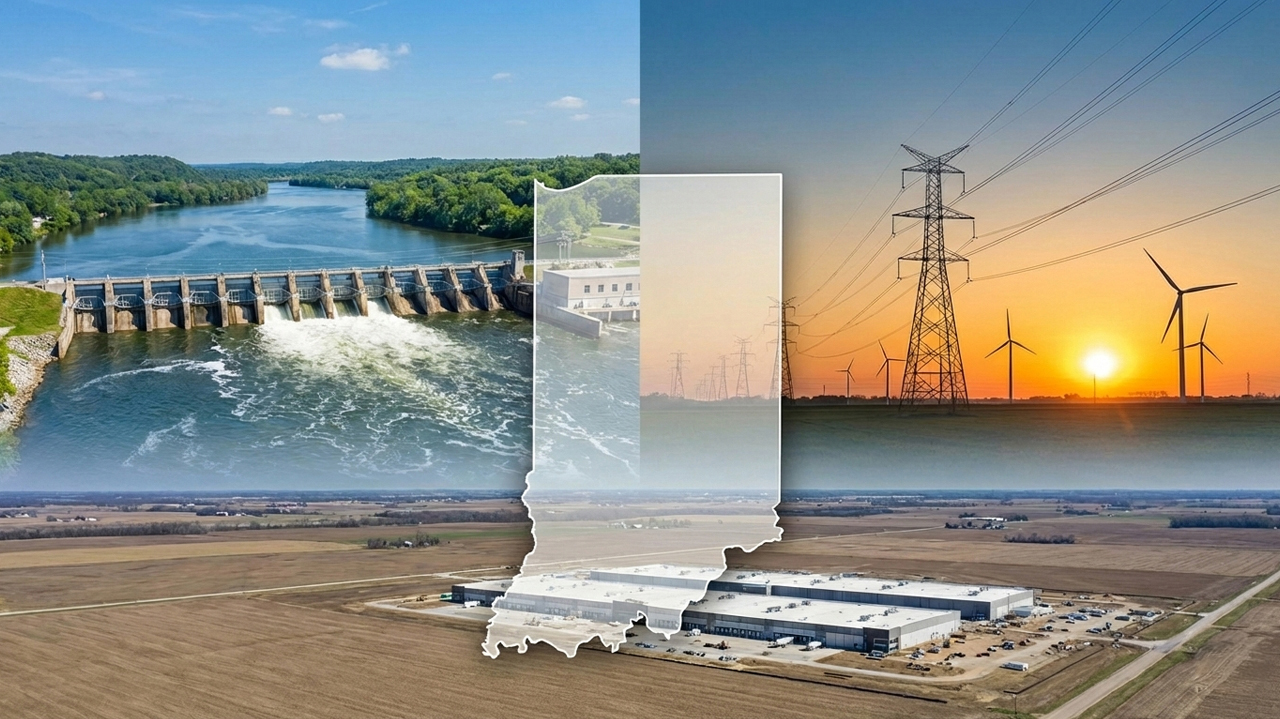

The rapid acceleration of digital infrastructure demand has exposed structural constraints within many traditional data center markets. For more than a decade, development activity was heavily concentrated in established hubs such as Northern Virginia, Phoenix, and Silicon Valley, where connectivity and capital converged. While that concentration proved efficient during periods of moderate growth, it has also intensified pressure on land availability, power infrastructure, and regulatory capacity, prompting a strategic shift toward markets that offer a balanced foundation of land, power, and water. Indiana aligns closely with this evolving data center site selection framework. With its industrial-grade power backbone, large contiguous parcels of developable land, sustainable water supplies sourced near the Great Lakes, and a regulatory environment that accelerates project timelines, Indiana enables both hyperscale data center development and distributed micro data centers to thrive. Recent announcements, including the EdgeMicro data center in Indianapolis, Microsoft’s and Amazon’s data centers in northern Indiana, and Google’s $2 billion facility in Fort Wayne, signal growing institutional confidence in the state’s capacity to support large-scale digital infrastructure investment.
Why Land, Power, and Water Are the Foundation of Data Center Site Acquisition
Data centers are the physical buildings where the data that powers cloud services, artificial intelligence, business systems, and everyday internet activities is stored, processed, and shared. These are highly secure facilities filled with powerful computing hardware that requires constant electricity and cooling. Without reliable infrastructure, these systems can fail, causing disruptions that affect millions of people and businesses. For anyone looking to acquire data center land or pursue data center site acquisition, three fundamental resources are non-negotiable:
Data centers require large sites that can support heavy infrastructure, security, parking, backup generators, and future expansion. Ample industrial land for data center use allows operators to build large campuses or cluster smaller facilities to support phased growth. It also reduces the cost and complexity of site assemblage, a major challenge in dense coastal markets where industrial property for sale Indiana-style is virtually nonexistent at competitive price points.
These centers operate around the clock, and the servers they house consume substantial electricity, in some cases comparable to tens of thousands of homes. Even brief interruptions can lead to downtime, data loss, or performance degradation. Successful data center development site selection depends on access to resilient, high-capacity electrical infrastructure that can deliver sufficient megawatt capacity today while accommodating future load growth. Power-ready industrial property dramatically reduces the time and cost to reach operational status.
Traditional & micro data centers generate significant heat from continuously operating servers, making effective cooling essential. Water-based cooling systems remain among the most efficient solutions for high-density compute environments. Because some facilities consume millions of gallons per day, dependable water access is a critical factor for buyers looking to purchase data center site assets. Regions with limited water availability introduce both operational and ESG-related risks, making water-rich markets like Indiana increasingly attractive.
Why Indiana Emerging as a Top State for the Data Center Investment Market
At Allies Commercial Realty, we are observing heightened demand for industrial land for data center development, power-accessible sites, and scalable development parcels across the state. This activity reflects disciplined capital allocation rather than speculative interest. The shift is fundamentally driven by infrastructure feasibility, cost predictability, and long-term operational planning:
Abundant and Affordable Land for Development
Land availability is foundational in hyperscale data center development, yet many primary markets face severe limitations due to high demand and regulatory complexity. Indiana sets itself apart by offering large, industrially zoned parcels ideal for building expansive data center campuses. These sites provide the capacity needed for current construction and future expansion, allowing operators to scale without relocating or reentering lengthy permitting cycles. Former farmland and repurposed industrial sites provide vast, low-cost footprints for rapid deployment. Notable examples include Meta’s 1,500-acre campus in Lebanon and Amazon’s 1,200-acre project in New Carlisle. Compared with saturated coastal markets, Indiana industrial property for sale pricing remains competitive and predictable, typically 40 to 60 percent below national averages. This pricing advantage enables scalable hyperscale data center development, while innovation hubs such as the LEAP District support more compact micro-edge facilities with prebuilt infrastructure. From a brokerage standpoint, the availability of industrial land for data center use, with infrastructure proximity, creates tangible opportunities. Developers who acquire data center land now can secure scale before competition drives up costs in constrained markets.
Robust Infrastructure for Power-Ready Industrial Property
At the core of every data center is a simple requirement: uninterrupted, high-capacity power. Indiana benefits from a well-established industrial power grid originally built to support manufacturing and logistics operations, creating a strong foundation for digital infrastructure growth. The state’s diverse energy mix, including coal, natural gas, nuclear, and expanding renewable sources, provides the reliability needed to support power demand that could rival entire cities by 2030. Utilities such as Indiana Michigan Power and NIPSCO are investing billions in grid upgrades to accommodate hyperscale expansion. State incentives further support on-site solar and battery storage integration, improving efficiency for both hyperscale and emerging edge deployments. Indiana’s extensive network of high-capacity substations and transmission lines enables operators to secure the required megawatt capacity more efficiently than in Tier 1 coastal markets, which are experiencing multi-year interconnection delays. Power-ready land assets in Indiana, such as the Terre Haute site, offer accelerated paths to operational status.
Plentiful Water Resources Supporting Colocation Facility Development
Indiana benefits from substantial freshwater resources, including proximity to the Great Lakes watershed and access to regional aquifer systems. In northern parts of the state, these resources, along with established municipal water systems, provide operators with greater planning certainty than water-constrained markets, a dynamic reflected in major hyperscale investments such as Amazon’s New Carlisle development. Reliable water access supports colocation facility development at scale while meeting modern ESG and sustainability reporting requirements. Indiana’s water stability supports efficient cooling approaches such as closed-loop systems and hybrid cooling designs. For institutional investors, markets with dependable water resources typically carry lower long-term regulatory and operational risk, a key consideration in any serious data center investment evaluation in Indiana.
Want a quick snapshot of why Indiana is gaining momentum for data center development? Download our simplified PDF for the key highlights.
Download the Quick OverviewFavorable Regulatory and Economic Environment
Indiana’s pro-business policies provide a supportive framework that enables faster data center development while helping operators manage long-term costs. The state offers targeted incentives for development, including long-term sales tax exemptions on qualified equipment and energy under House Bill 1007, as well as streamlined permitting processes that can accelerate project timelines compared to those in more congested neighboring states. For developers planning 20 to 30-year operational horizons, this regulatory predictability represents a meaningful financial advantage when evaluating data center site acquisition targets. Favorable zoning for industrial redevelopment and proactive utility coordination for large-load users further reduce upfront hurdles, improve cost visibility, and create a more efficient path from data center site selection in Indiana to shovel-ready status.
Strategic Midwest Location and National Connectivity
Indiana’s central position in the Midwest offers a strategic advantage for data center operators serving regional and national markets. Indianapolis serves as a major fiber crossroads, with extensive dark fiber networks, multiple interconnection points, including the Midwest IX, and direct routes to Chicago, St. Louis, Columbus, and other key metros. For edge and micro data centers, central placement enables proximity to logistics networks, enterprise campuses, healthcare facilities, and manufacturing hubs, making the region a cost-effective alternative to congested coastal markets for anyone ready to buy data center site assets in a high-connectivity corridor.
Workforce and Technical Talent Pipeline
Skilled labor is as important as infrastructure for running data centers efficiently. Indiana offers a robust pipeline of engineering and technical talent. Purdue University leads in top programs in computer science, engineering, AI, and semiconductors, and Purdue and Ivy Tech together supply more than 10,000 STEM graduates annually. Indiana also maintains a deep bench of skilled trades professionals, including electricians, HVAC specialists, construction managers, and industrial technicians, who form the backbone of large-scale data center development, site construction, and ongoing operations.
Why Now the Time to Acquire Data Center Land
The data center landscape is rapidly evolving as demand intensifies from hyperscale expansion, rising AI workloads, and the growth of edge computing. These trends are driving a fundamental shift in data center site-selection priorities in Indiana, away from traditional prestige coastal markets toward more practical, resource-rich regions. Investors and operators now prioritize infrastructure readiness, resource security, cost stability, and scalable growth potential when they buy data center site assets. Indiana exemplifies this shift by offering a compelling combination of these critical factors. This transition is not about replacing established Tier 1 hubs but rather complementing them through geographic diversification and risk mitigation. As operators seek to reduce concentration risk and build more resilient networks, markets like Indiana are becoming essential components of long-term deployment strategies. What was once viewed primarily as industrial land for data center use is now recognized as vital digital infrastructure. The state’s abundant land, robust grid, reliable water supply, skilled workforce, and central location provide a structural foundation for sustainable, scalable data center development. This is not a temporary trend but a durable evolution in the industry.
Conclusion
As deep learning workloads drive higher power densities and edge computing requirements continue to expand, secondary markets with balanced infrastructure are gaining prominence. Indiana’s combination of resource stability, geographic centrality, and infrastructure readiness positions it as a practical and strategically resilient alternative to saturated primary markets. The next phase of data center development will favor markets that can deliver scalable industrial property for sale, Indiana-style: dependable power, sustainable water access, and predictable development pathways. Indiana continues to check each of these boxes with growing consistency. As hyperscale data center development accelerates and edge computing moves closer to end users, the state’s balanced infrastructure, central location, and cost stability position it as a logical destination for long-term deployment. For operators, investors, and developers, the opportunity for data center investment in Indiana is grounded in real infrastructure readiness and long-term operational feasibility. Securing the right data center development site early will become increasingly important as competition for power-ready land in Indiana intensifies. If Indiana is on your radar, connect with Allies Commercial Realty to explore opportunities, evaluate data center site acquisition targets, and identify power-ready industrial property that aligns with your deployment timeline.
Topic: Data Center Real Estate
When timing and infrastructure matter, the right guidance makes the difference. Partner with Allies Commercial Realty to move forward with confidence.
Talk to a Broker
About the Author
Mitchell Ayers | Industrial Broker
Mitchell specializes in industrial leasing, sales, and tenant representation throughout Central Indiana. He works closely with manufacturers, distributors, logistics companies, and business owners to help them evaluate facilities and make informed real estate decisions that support long-term operational growth.
Download Our Free Resource:
The Future of Industrial Real Estate in Indiana:
E-Commerce and Beyond
You might also enjoy reading:



Cookies improve your browsing experience, deliver tailored ads or content, and assess our website traffic. If you click 'Accept All’ you are giving your consent for us to utilize cookies. Check our cookies policy here.
Adding {{itemName}} to cart
Added {{itemName}} to cart